Dog Photography: Part 2
Claudio Piccoli’s love of dogs is what helps him create the most memorable photographs
Used with permission from Claudio Piccoli 2025
In the world of dog photographers, Claudio Piccoli, is considered by many to be one of the best. He is a Nikon Ambassador for Italy and a Nikon School Master. He lives in Piverone, Italy, but tours the world teaching others how to capture dogs at their finest. I’ve worked with some talented photographers over the years, but there’s something very special about Piccoli.
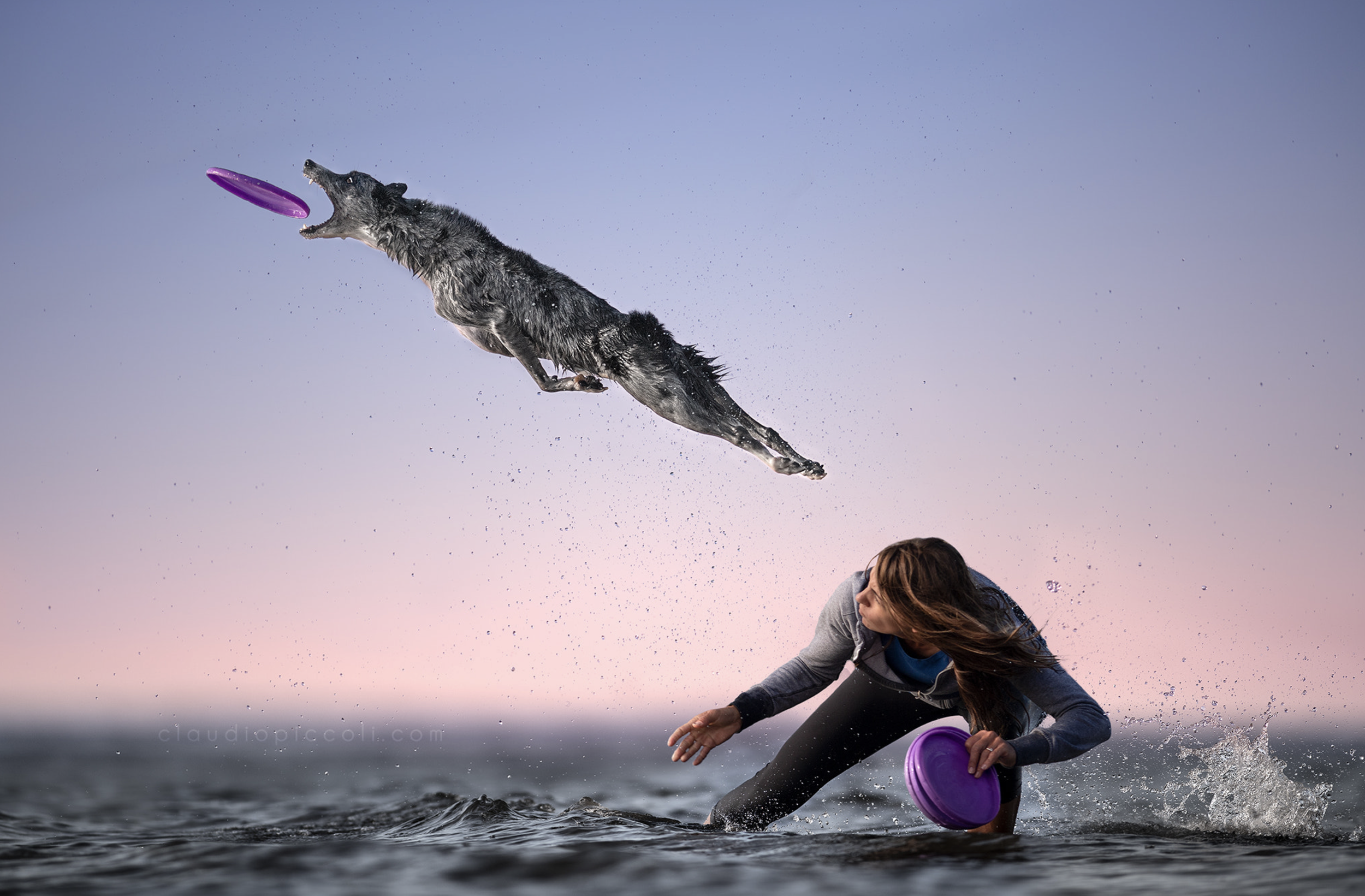
His body of work is emotionally packed. He’s technically on point. It may seem like a little thing to be technically proficient, but Piccoli’s subjects are dogs. And, as smart as they are they still do things totally out-of-character and thus, Piccoli must anticipate their moves and natural instincts. It’s likely his love of dogs and photography that makes him stand out in the sea of photographers and those wanting to learn the basics of this very challenging craft. Either way, Piccoli has figured something out that I really needed to understand for myself. How can a photographer control lighting, composition, exposure, focus and all that goes with image making and still stay glued to a dog that can be jumping six feet in the air to catch a frisbee? So I contacted him.
Used with permission from Claudio Piccoli 2025.
He’s not simply taking pictures. As Piccoli says, he works with lighting, composition and critical focus as his primary tools. Sounds easy to the layman, but some dogs can run as fast as 45 miles-per-hour, depending on the breed.
To any photographer that’s incredibly fast. Capture a tack-sharp image in a few frames of a camera takes lightning quick reflexes and timing, even with auto-focus and a motor-drive. Few wildlife photographers have to deal with those kind of speeds.
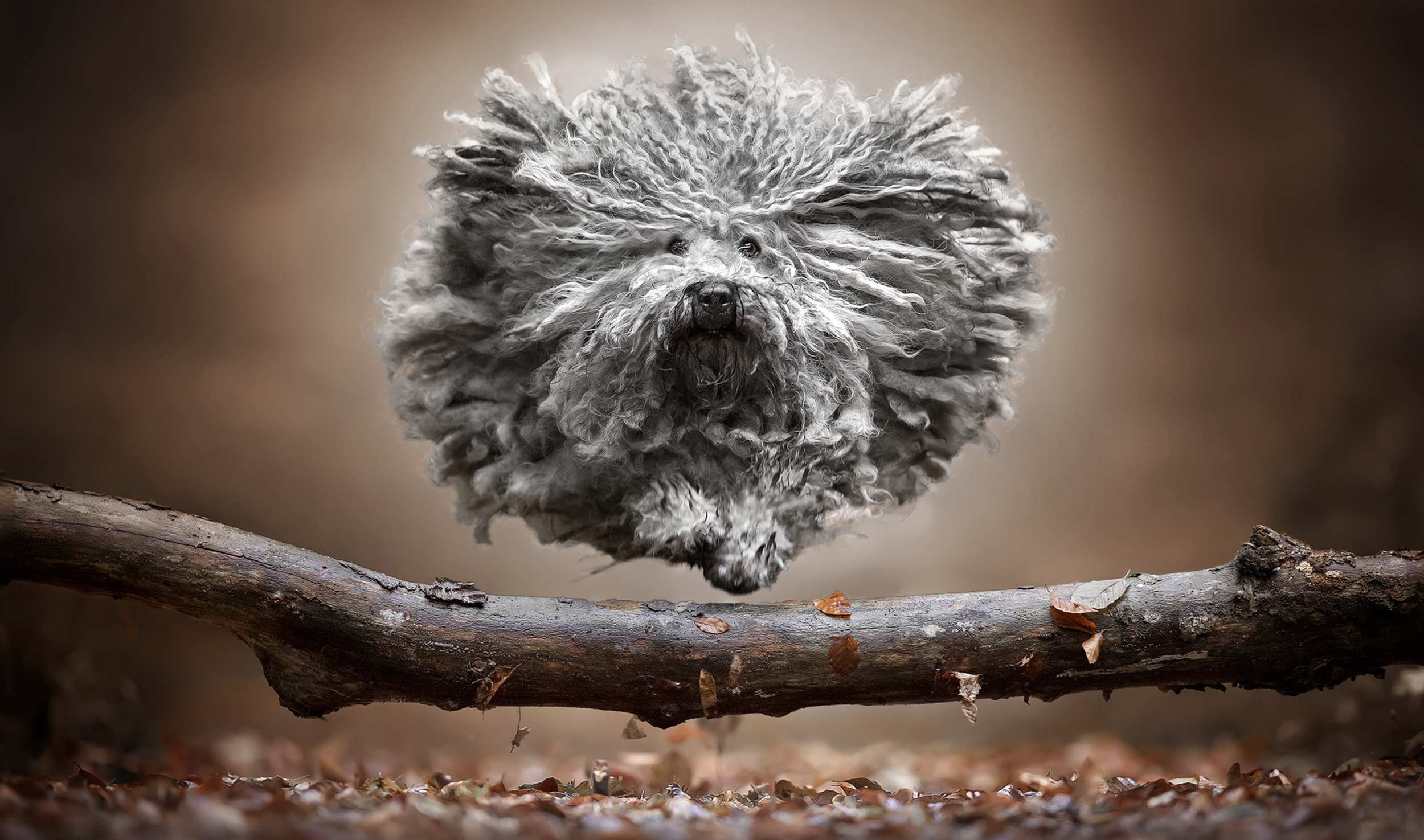
And, these images are not AI created, or heavily edited. They are from the hands and mind of Piccoli, although he uses Adobe Lightroom and other editing software. But that’s understandable given most of his images are taken in very challenging conditions, typically outdoors. He often incorporates people in the images too, making it even more challenging.
As I wrote in Part 1 of this series, I’m writing about this subject because of my own love of dogs, especially working dogs. One thing to note: the dog sports photographer is not the same as a dog portrait studio photographer. These are very different skills, which I’ll address later in the series.
What is not surprising is that Piccoli is equally adept at both dog portraiture and dog action. He clearly understands more than fundamentals, he understanding the subject.
But to stay on target, dog sports photographers are the equivalent of a Formula 1 photographer. There is absolutely no time to think, either you are prepared and ready for the action, or you’re not. And that action can happen in nano-seconds!
Piccoli has figured out how to capture the energy of a sporting dog at speed, and his photographs tell a big story of who he is and why he teaches. He pans the camera, he changes his point-of-view, and tracks the eyes of the dog waiting for the exact moment to tap the shutter.
It took a lot of emails to get Piccoli’s attention from his home in Italy due to his busy schedule, but he was kind enough to reply to my interview request. Here’s a shortened version of what he had to say, which was edited because his primary language is obviously Italian:
Do people need to buy an expensive telephoto lens to take great photos of dogs in action?
No, you don’t, but an expensive telephoto lens could be a good choice if used correctly. For example a 200mm f2 is an amazing and mid-priced lens that when used correctly (most of the people I met weren’t able to push that lens to the limit) can bring you beyond your comfort zone. Also the 300mm f2,8. But many people buy it and complain because the photos are not what they were expecting… and there are many reasons behind it. The money don’t make anyone a great photographer. We need passion and a lot of time practicing and studying.
What camera and lens do you recommend for an amateur who wants to take photos of dogs in action?
I recommend a full frame to work in low light conditions as always happen for dog photographers outdoor in forests or indoors. So almost any full frame mirrorless is good for that! For those on a budget I would suggest a Nikon Z6III or Canon R6II or Sony A7IV. Pushing a bit more is possible but only if you know how to use it and set it properly…. Nikon Z8/Z9, Canon R5/R3/R1… Sony A9/A1 etc. For a lens I would recommend a 70-200mm f2,8 and a prime 135mm f1,8 for the lowest light conditions indoor.
Give us a tip for taking better photographs of dogs in action.
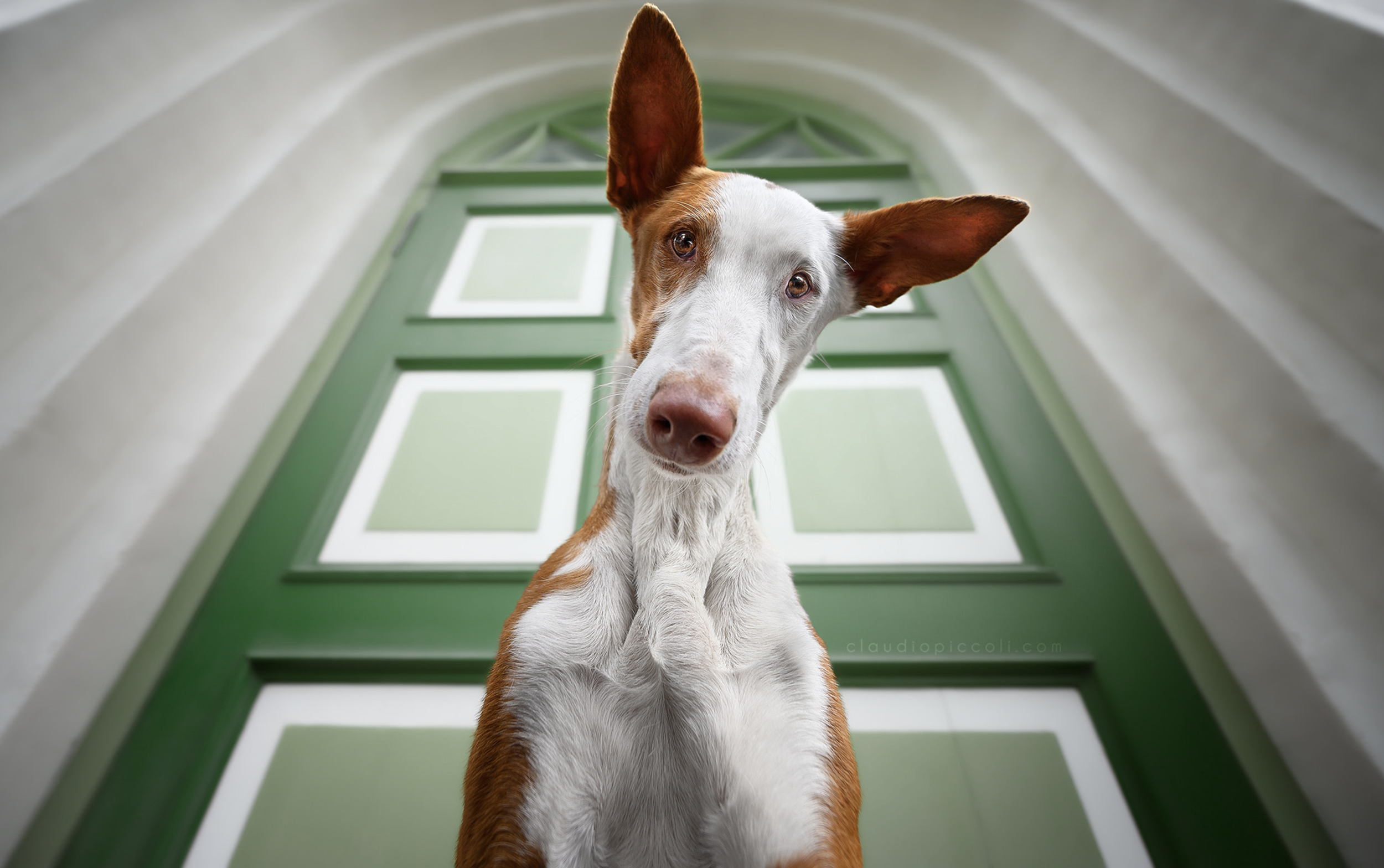
Love the dogs, watch them and risk all the possible settings that helps to get the dog popping out in your screen (3D effect) when you do the shooting. I discovered 90% of people never risk settings or push a technique to the limit!
Used with permission from Claudio Piccoli 2025.
Do I need to learn Photoshop? Why is editing software so important?
Everybody doing Photography today needs to learn a bit of Lightroom and Photoshop to extract the best from the photos especially because the editing of dogs running in low light conditions can be critical.
Will you be coming to the U.S. again to teach dogs in action photography in 2026?
Yes. I will be in Austin, Texas on April 10th-12th of 2026 and near the Ontario border to the USA from 29th-31st of May. I will also be teaching along the Oregon Coast on the 18th-20th of September in 2026.
What is the Number 1 problem people run into when they decide to take photos of dogs in action?
That I ask them to push their limits if they want something that wows a viewer. So when they see what “risking” means in dogs in action, they get in trouble with focusing.
Are your online classes in English?
Yes. My main Master in Dog Photography Outdoor is in English: https://www.claudiopiccoli.com/outdoor